
Uncomfortable Truth: Purchasing Power Has Taken a Serious Hit in the Past Six Years
Free article


Despite claims by permabulls that large gains in the stock market have more than compensated for the loss of purchasing power due to inflation in the past six years, the uncomfortable truth is that purchasing power has eroded for the overwhelming majority of the working population.
Some permabulls and economists cannot handle the truth, and the truth is more complicated than vacuous claims found on financial social media and blogs. So, let us start with the basics.
The price level rarely falls.
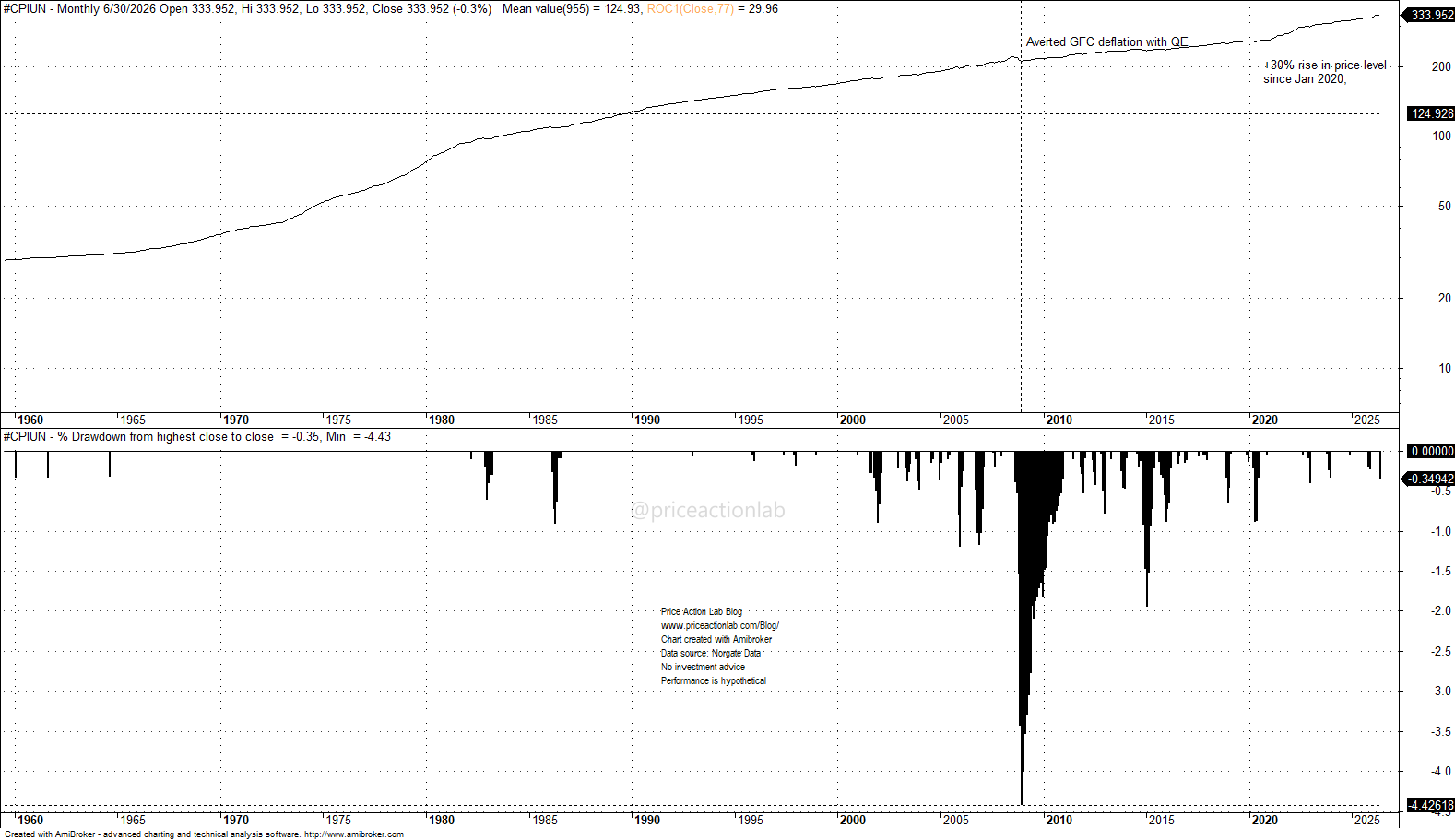
Since 1960, the largest fall in the CPI index has been 4.4% during the GFC. Some people called it “deflation,” but, in reality, it was a “pre-deflation” correction, because there was never actual deflation. Quantitative easing averted deflation and guaranteed a steady increase in the price level after the GFC crisis.
Prices always rise, and that impacts purchasing power. However, since the last inflation cycle of the 1980s, the rise in the price level was moderate, and purchasing power even increased due to gains in real earnings.
But then, the 2020 pandemic occurred, and quantitative easing and deficit spending went in full-turbo mode. Since 2020, the price level (CPI) has increased by 30%.
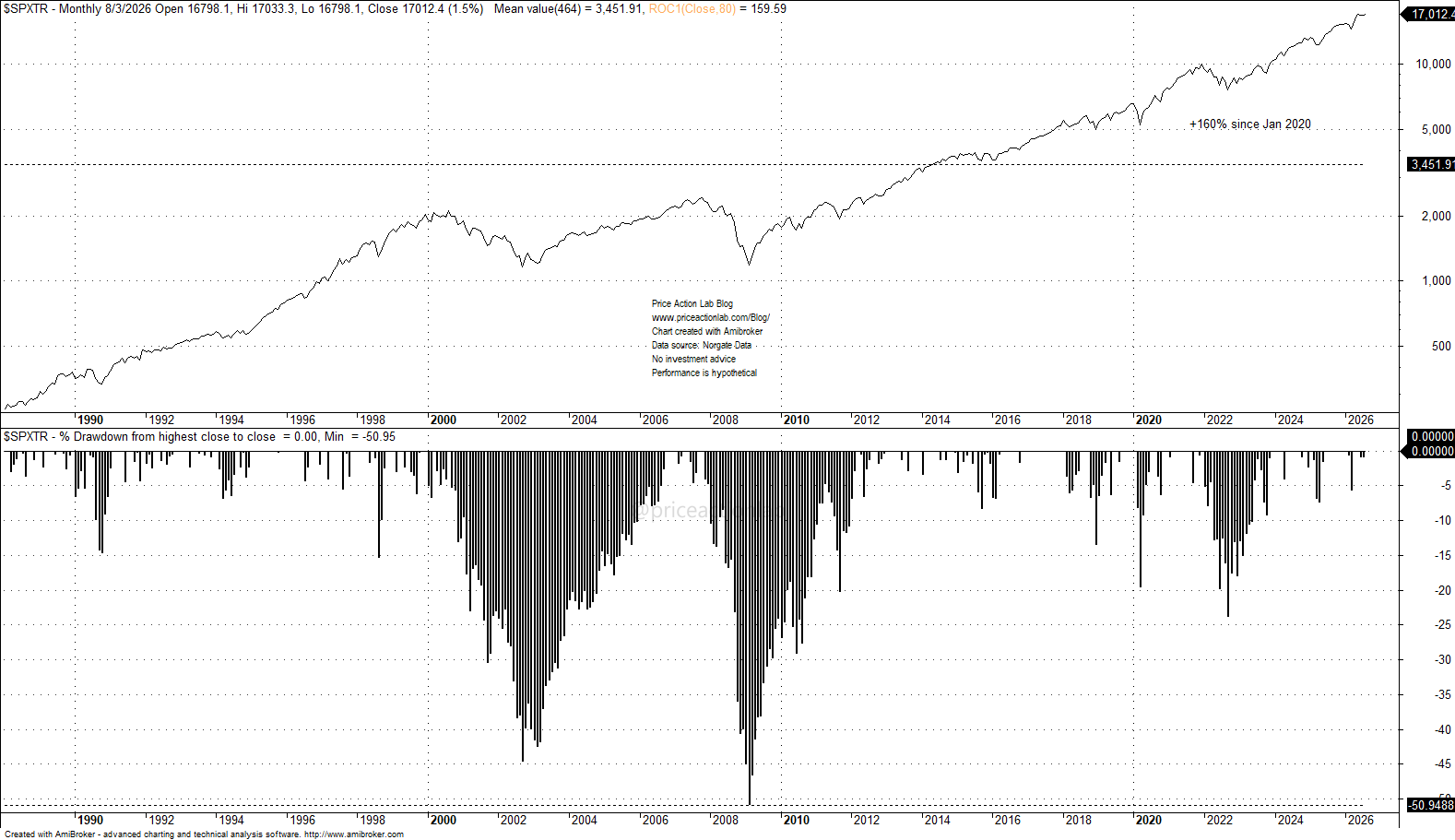
“The price level increased by only 30%? The S&P 500 index total return increased by 160%! ”, the stock permabull with questionable quantitative skills will argue.
Let us peel back the layers and dive into the numbers.
According to AI (Grok):
While ~30%+ of U.S. adults report stock investments over $500K in recent consumer surveys, the share of the working population with more than $600K specifically in passive-index-tracking stock portfolios is meaningfully smaller—likely in the low-to-mid teens or lower once all the filters are applied.
Why did I ask Grok to estimate the share of the working population with more than $600K in passive index stock portfolios? I did that because I assumed a minimum of $100K/year for standard of living expenses. In order to take advantage of the stock rally and more than compensate for the loss of purchasing power while not assuming meaningful real earnings increases, an investor needed approximately $500K to $600K in a passive portfolio in 2020. Otherwise, the investor had to sell stock to make up for the loss of purchasing power.
Impressive stocks gains
The S&P 500 index return has gained 160% since 2020, which is an impressive return for an investor, assuming no panic and selling during the 2022 correction, which is a big “if”. Those who remained invested could have used the dividend gains to compensate for the loss of purchasing power.
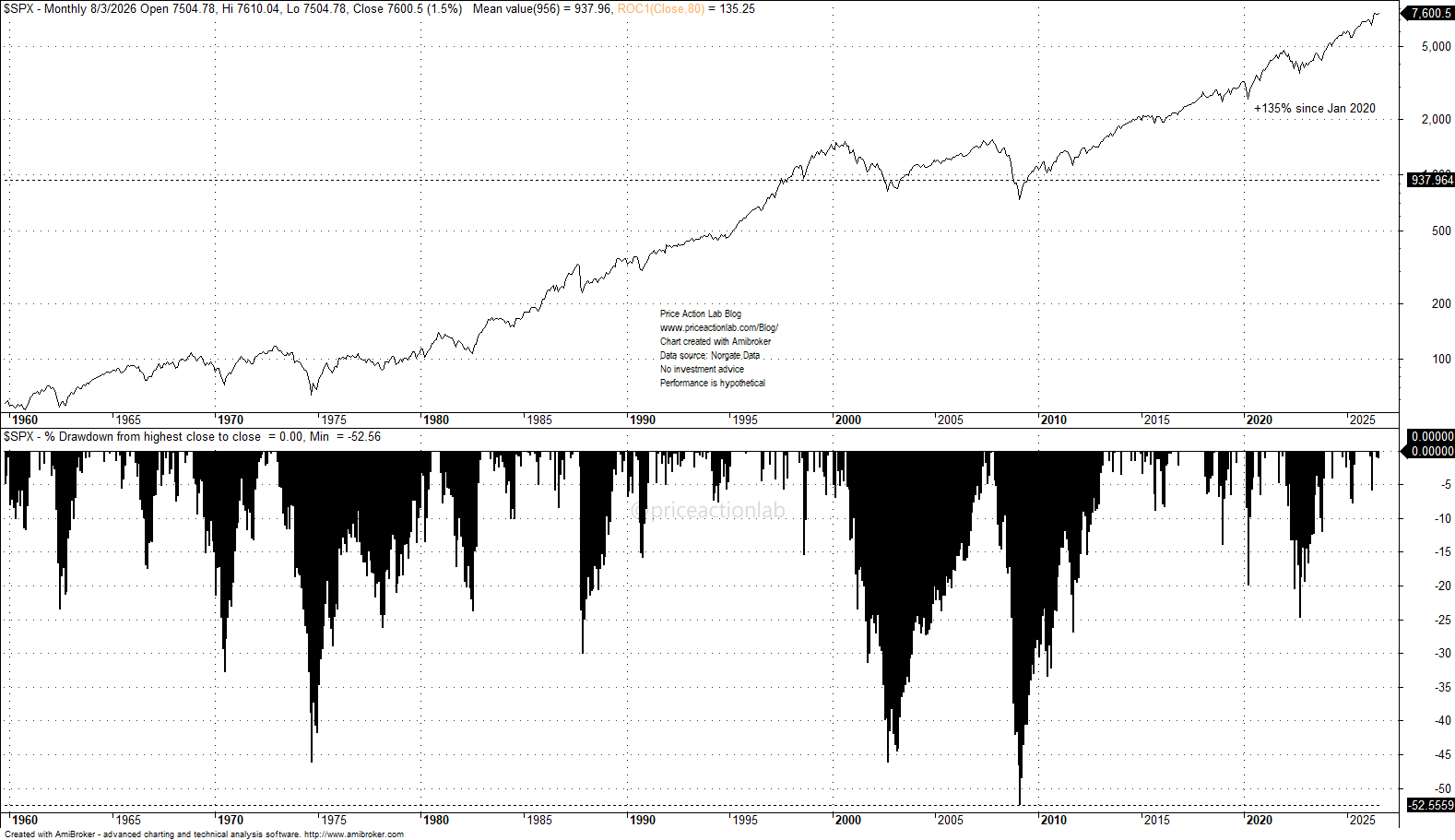
In fact, the S&P 500 index gained 135% since 2020, and the difference from the total return of $160% is 25% and about 5% less than the official CPI rise in the same period. Ceteris puribus, those who had $500K to $600K in their account were able to compensate for their loss of purchasing power with the dividends and not be forced to sell stocks, given the assumption of the $100K/year minimum requiremnt for living expenses.
Stock market gains directly benefit a small percentage of the population
Now you see that only a very small percentage of the working population with a relatively sizeable investment in a stock index fund (even in the SPY ETF) was able to make up for their loss of purchasing power due to skyrocketing inflation after 2020. The overwhelming majority relied on real-earnings to rise, keeping their job, and many had to work two or three jobs to survive and pay for skyrocketing living expenses, including housing, health insurance, energy, and groceries.
The uncomfortable truth is that the rise in stocks has benefitted a fraction of the population who had significant investments in the stock market, while the overwhelming majority of the population has moved toward the poverty threshold, and inequality has increased.
Price stability is the most important state of an economy. At this point, there is a quasi-price stability but at a higher price level with persistent inflation much higher than the 2% target of the central bank. The majority of the population witness the stock market rallying, but they do not have meaningful exposure to take advantage of it: the stock rally benefits only a small percentage of the population, probably around 5% to 15%, but no one knows the exact numbers, it may be 20%, or even 5%.
If you want analysis from someone who has actually lived through several market cycles, has credentials that include four books published since 1999, has many peer-reviewed articles published in trading publications, and can effectively combine quantitative skills with market analysis, then you are in the right place.
Subscribe to Markets and Systems to get access to subscriber-only content. You will receive the weekly report and unlock the details of strategic and tactical allocations and our weekly market analysis.